3-sun Axis Panel Balance
It was cloudy from the morning today, with some rain during the day. It was still as warm as it has been over the past few days, and the wind was strong too. People often say that autumn weather changes quickly, and that has certainly been true these past few days. I spent the whole day working in the workshop again today.
I had planned to start attaching the sliding key panels to the 5-sun puzzle boxes today. However, I was a little concerned about the high humidity, so after finishing the work on the panels and boxes, I attached only the single-piece panels. I am making 5-sun 10-steps puzzle boxes with drawers this time. Of the two side panels, one is a single-piece panel with no sliding key. This means I can attach it even on a slightly humid day like today. The reason is that the outer decorative panel, which is the Yosegi panel, has a large area glued to the Aruki sliding panel. As I mentioned in yesterday’s article, this Aruki panel is almost the full height of the box. Unlike the other Aruki panels, it supports almost the whole outer panel, leaving very little of it unglued. This makes the outer panel less likely to warp, so I can attach it even in weather like this. I usually attach this single-piece panel and the sliding key panel on the other side at the same time. Today, though, I decided to be careful and attach only this side. The weather looks like it will be more settled tomorrow, so I should be able to attach the panels on the other side then.
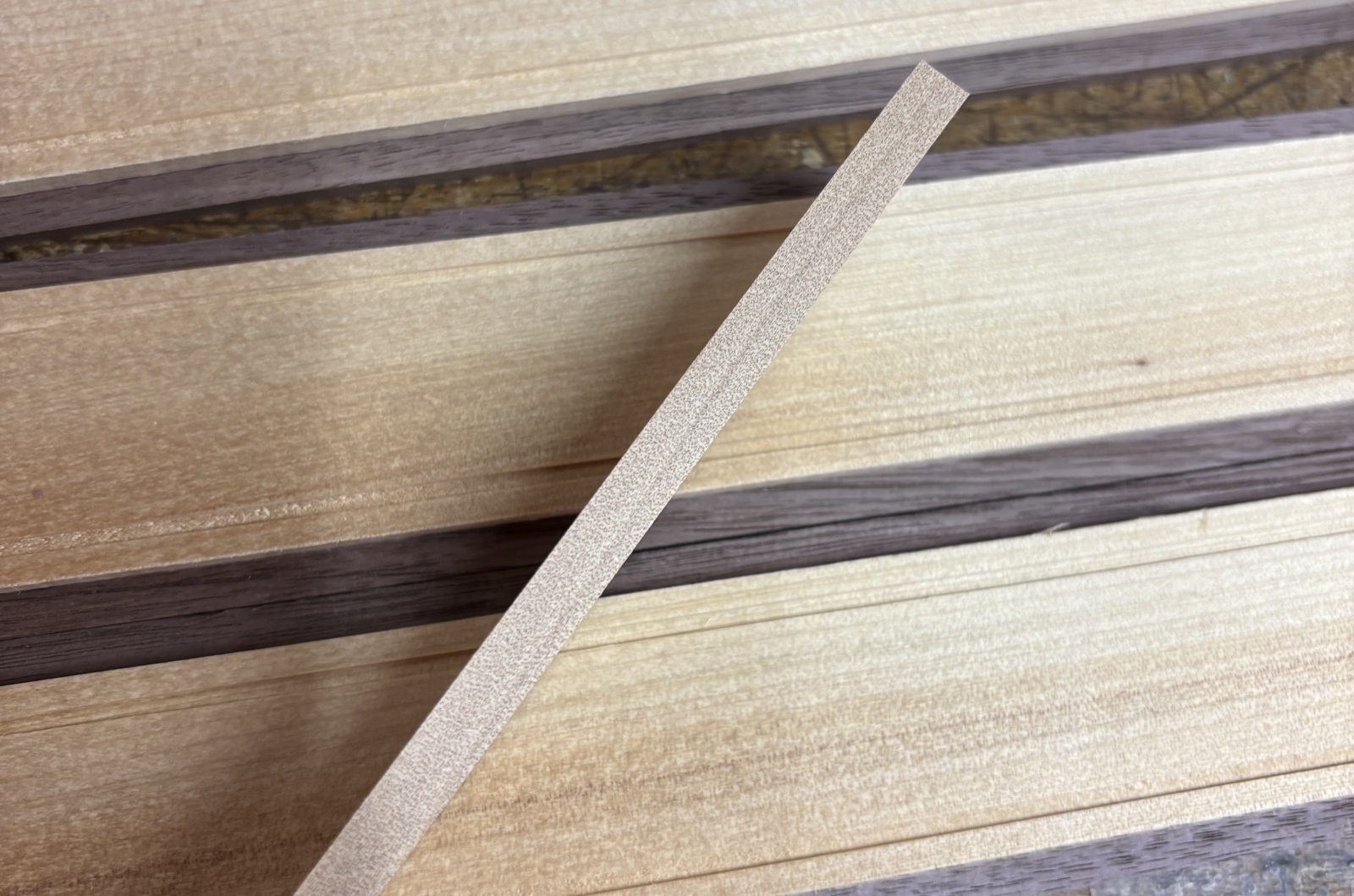
While working on these boxes, I was also thinking about getting ready for my next project. At the beginning of this month, I had planned to make another batch of 4-sun 14-steps puzzle boxes, but I have decided to make the 3-sun 18-steps puzzle boxes first. I am making these at the request of an overseas shop, but I also plan to keep a few for my own stock. It will be a fairly small batch of about 30 boxes. For this batch, I am using the popular combination of traditional Yosegi and Walnut. The 3-sun 18-steps puzzle box is very popular, and I make it quite often. Perhaps this is because you do not often see an 18-steps mechanism in such a small box. However, as I have written before, this model also has a few risks. The one I pay the most attention to is the strength of the box. In the 18-steps mechanism, four panels move, rather than the three moving panels used in mechanisms of 14 steps or fewer. This means I cannot glue the bottom panel firmly to the box, because it also moves as part of the mechanism. The fixed bottom panel helps keep a small box strong. Without it, the frame relies on the two internal axis panels for support. Since the box is small, the axis panels are also small, and the area where they are glued to the long side panels is limited. This makes the structure weaker. To deal with this, I have tried to keep the glued areas as large as possible. But making these areas larger means making the axis panels thicker, which leaves less space inside the box. Still, there is little point in keeping more space inside if the box breaks. So this time, I have made the axis panels thicker than before, at 7 mm (photo). The thickest I had used before was 6.5 mm. It is only a small difference, but I expect it to make the box quite a bit stronger. I will see how this change affects the overall balance and use what I learn when making future boxes. A strong structure is important, but I also believe the space inside and the overall balance matter.
I had planned to start attaching the sliding key panels to the 5-sun puzzle boxes today. However, I was a little concerned about the high humidity, so after finishing the work on the panels and boxes, I attached only the single-piece panels. I am making 5-sun 10-steps puzzle boxes with drawers this time. Of the two side panels, one is a single-piece panel with no sliding key. This means I can attach it even on a slightly humid day like today. The reason is that the outer decorative panel, which is the Yosegi panel, has a large area glued to the Aruki sliding panel. As I mentioned in yesterday’s article, this Aruki panel is almost the full height of the box. Unlike the other Aruki panels, it supports almost the whole outer panel, leaving very little of it unglued. This makes the outer panel less likely to warp, so I can attach it even in weather like this. I usually attach this single-piece panel and the sliding key panel on the other side at the same time. Today, though, I decided to be careful and attach only this side. The weather looks like it will be more settled tomorrow, so I should be able to attach the panels on the other side then.
While working on these boxes, I was also thinking about getting ready for my next project. At the beginning of this month, I had planned to make another batch of 4-sun 14-steps puzzle boxes, but I have decided to make the 3-sun 18-steps puzzle boxes first. I am making these at the request of an overseas shop, but I also plan to keep a few for my own stock. It will be a fairly small batch of about 30 boxes. For this batch, I am using the popular combination of traditional Yosegi and Walnut. The 3-sun 18-steps puzzle box is very popular, and I make it quite often. Perhaps this is because you do not often see an 18-steps mechanism in such a small box. However, as I have written before, this model also has a few risks. The one I pay the most attention to is the strength of the box. In the 18-steps mechanism, four panels move, rather than the three moving panels used in mechanisms of 14 steps or fewer. This means I cannot glue the bottom panel firmly to the box, because it also moves as part of the mechanism. The fixed bottom panel helps keep a small box strong. Without it, the frame relies on the two internal axis panels for support. Since the box is small, the axis panels are also small, and the area where they are glued to the long side panels is limited. This makes the structure weaker. To deal with this, I have tried to keep the glued areas as large as possible. But making these areas larger means making the axis panels thicker, which leaves less space inside the box. Still, there is little point in keeping more space inside if the box breaks. So this time, I have made the axis panels thicker than before, at 7 mm (photo). The thickest I had used before was 6.5 mm. It is only a small difference, but I expect it to make the box quite a bit stronger. I will see how this change affects the overall balance and use what I learn when making future boxes. A strong structure is important, but I also believe the space inside and the overall balance matter.