Choosing the Right Wood for Aruki
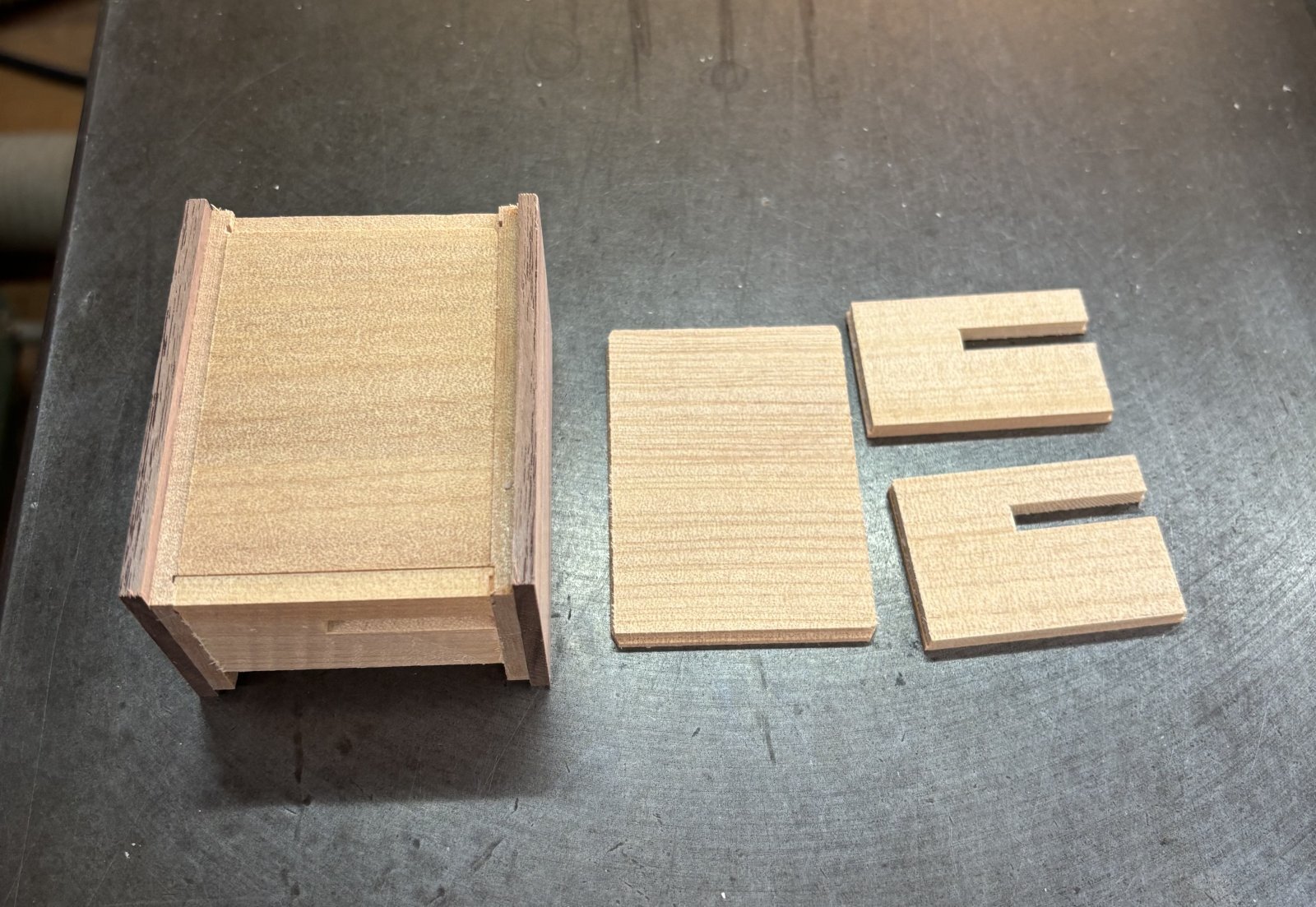
It was another sunny and hot day today. I continued working on the 3-sun 12-step puzzle boxes from yesterday. It took the whole day again to make and attach the Aruki panels. I thought it might be a little too much work to finish in one day, but since this 12-step type uses three Aruki panels, I was able to complete it by the evening.
I was careful again when choosing the wood for the Aruki panels, but the wood was a little harder than I wanted, so attaching them was not easy. These days, it is difficult to find very soft Agathis wood, and most of it has a tight grain and is quite hard. Since the wood is kiln-dried, it tends to be a little harder than naturally dried wood, and it seems that naturally dried Agathis wood is no longer available in Japan. For these Aruki panels, it is better to use softer wood or the softer parts of the wood because they have more flexibility and are easier to attach and adjust. With hard wood, once the mechanism becomes loose, it will not return to its original shape, while more flexible wood is less likely to become loose in the first place, and the wood fibers are also less likely to be completely crushed. This time, I used the softest parts I could find in my stock, but they were still not quite soft enough.
Today, I put the boxes I had made into cases for storage. I feel a little more at ease now that they have reached this stage. This month, I have several large made-to-order batches, so I need to pay attention to the production pace. Next will be the Mame puzzle boxes, but there are about 80 of them, which is about the usual quantity, so I have a good idea of how long they will take. This batch of 3-sun puzzle boxes is larger than usual, so I was a little worried about how much time it would take. The next step is to attach the top and bottom panels. From here, I plan to work on the natural wood type first, finish those, and then continue with the traditional yosegi type.
Have a great weekend!
I was careful again when choosing the wood for the Aruki panels, but the wood was a little harder than I wanted, so attaching them was not easy. These days, it is difficult to find very soft Agathis wood, and most of it has a tight grain and is quite hard. Since the wood is kiln-dried, it tends to be a little harder than naturally dried wood, and it seems that naturally dried Agathis wood is no longer available in Japan. For these Aruki panels, it is better to use softer wood or the softer parts of the wood because they have more flexibility and are easier to attach and adjust. With hard wood, once the mechanism becomes loose, it will not return to its original shape, while more flexible wood is less likely to become loose in the first place, and the wood fibers are also less likely to be completely crushed. This time, I used the softest parts I could find in my stock, but they were still not quite soft enough.
Today, I put the boxes I had made into cases for storage. I feel a little more at ease now that they have reached this stage. This month, I have several large made-to-order batches, so I need to pay attention to the production pace. Next will be the Mame puzzle boxes, but there are about 80 of them, which is about the usual quantity, so I have a good idea of how long they will take. This batch of 3-sun puzzle boxes is larger than usual, so I was a little worried about how much time it would take. The next step is to attach the top and bottom panels. From here, I plan to work on the natural wood type first, finish those, and then continue with the traditional yosegi type.
Have a great weekend!