The Future of Natural Wood Types
A new week has started. It continued to rain over the weekend, and today the weather is still going back and forth between rain and breaks in the rain. However, the rainy season will probably end in about two weeks, so maybe this is still better than the heat that will come after that...haha. This rain and humidity have been affecting my work, so these have been difficult days for making boxes.
Today, I did the finishing work on the 5-sun 7-step boxes from the morning. This time, natural wood is used, so there is an extra step of polishing the side panels. I had already finished them once when they were still boards, but I do it once again at this stage. Solid wood is easy to scratch, and scratches are also easy to see, so I check it carefully and handle it with care. Once the undercoat is applied, I can feel a little more at ease. To help prevent scratches, I apply the coating a little thicker just to be safe. However, making the coating too thick is not always good for Japanese puzzle boxes. The mechanism can stick and become harder to release, and the coating may later cause the panels to warp. So a good balance is important. Since I applied the coating a little thicker, I moved the mechanism once at an early stage. The coating will not be completely dry until about one day later, so even if I move it now, the mechanism may still stick again. However, even if it does stick, I have already moved it once, so it will be much easier to move again. I will continue to check the movement carefully as the coating dries.
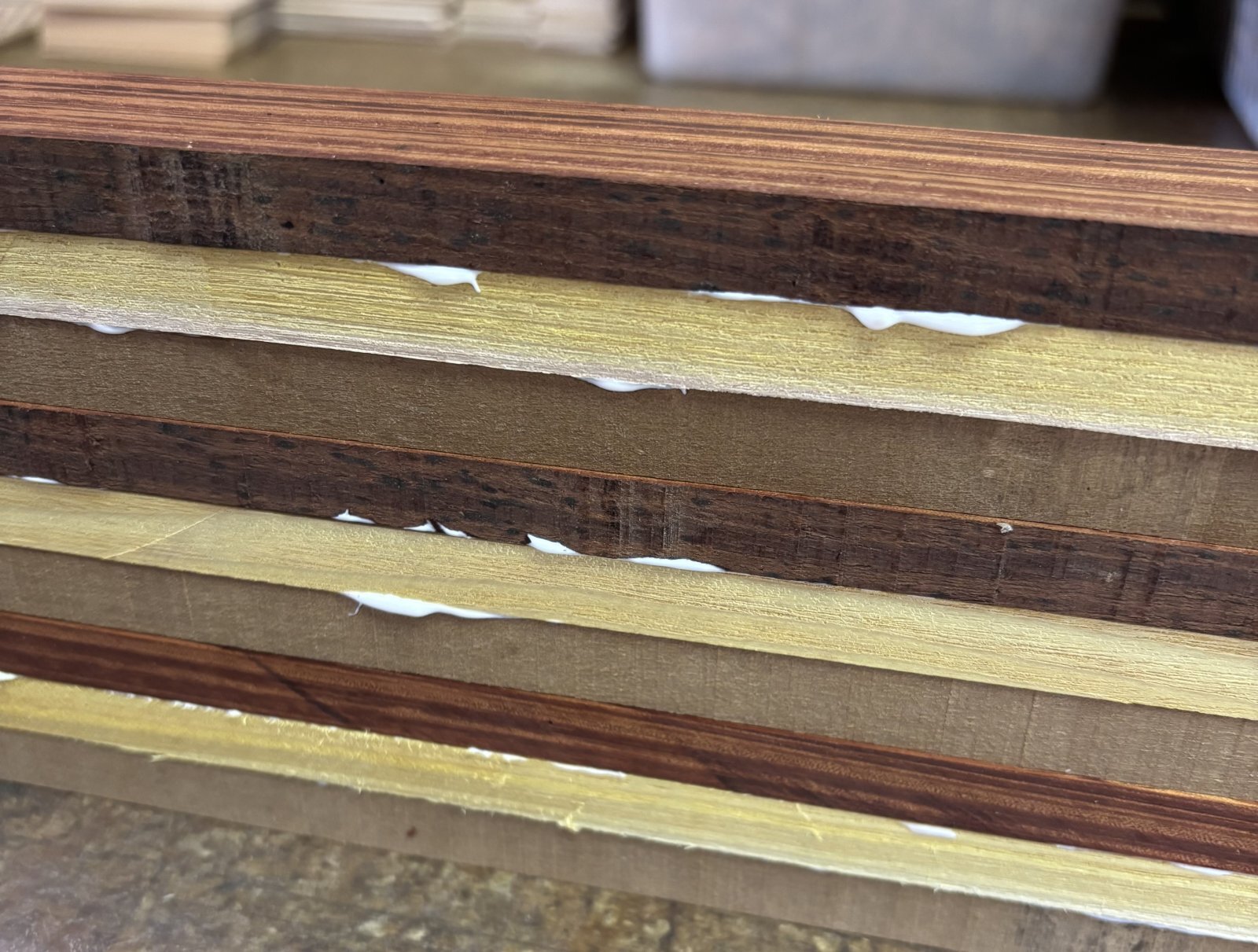
As I wrote yesterday, I had made a mistake with the number of 3-sun boxes to make, so today I added the missing materials. I prepared more frame panels and aruki panels, and I also made more axis panels. This is for about 20 additional boxes. With this, the full production of the 3-sun boxes will probably start soon. This time, by request, I will make a few boxes with natural wood top and bottom panels for the first time in a while. This is the type with four colors of wood arranged in stripes. The side panels are walnut, the same as the other boxes. I also plan to stop making this 3-sun natural wood type for a while after this. As I have written before, I have also not made the 4-sun natural wood top and bottom panel type for some time. It has become difficult to secure the materials, and the natural wood type uses a lot of the good parts of the wood, so it consumes a large amount of material. The price of wood has also risen a lot compared with before. I do not plan to buy more woods with special colors, such as red wood, purple wood, or yellow wood, in the future. So I need to think carefully so that I can continue using these woods while I am still making boxes. Common woods like walnut can still be purchased in the future, but the woods used for yosegi are much harder to find. Even if I bought a large amount of them now, I probably would not be able to use them all in the future. So from now on, I would like to use the special woods I already have for sliced yosegi sheets. Today, I first glued together three of the four types of wood for the top and bottom panels into a block. After cutting this block into thin boards, I plan to join the remaining type of wood to them. The four types of wood currently being used are Nyatoh, Rengas, Urushi, and Hō wood.
Today, I did the finishing work on the 5-sun 7-step boxes from the morning. This time, natural wood is used, so there is an extra step of polishing the side panels. I had already finished them once when they were still boards, but I do it once again at this stage. Solid wood is easy to scratch, and scratches are also easy to see, so I check it carefully and handle it with care. Once the undercoat is applied, I can feel a little more at ease. To help prevent scratches, I apply the coating a little thicker just to be safe. However, making the coating too thick is not always good for Japanese puzzle boxes. The mechanism can stick and become harder to release, and the coating may later cause the panels to warp. So a good balance is important. Since I applied the coating a little thicker, I moved the mechanism once at an early stage. The coating will not be completely dry until about one day later, so even if I move it now, the mechanism may still stick again. However, even if it does stick, I have already moved it once, so it will be much easier to move again. I will continue to check the movement carefully as the coating dries.
As I wrote yesterday, I had made a mistake with the number of 3-sun boxes to make, so today I added the missing materials. I prepared more frame panels and aruki panels, and I also made more axis panels. This is for about 20 additional boxes. With this, the full production of the 3-sun boxes will probably start soon. This time, by request, I will make a few boxes with natural wood top and bottom panels for the first time in a while. This is the type with four colors of wood arranged in stripes. The side panels are walnut, the same as the other boxes. I also plan to stop making this 3-sun natural wood type for a while after this. As I have written before, I have also not made the 4-sun natural wood top and bottom panel type for some time. It has become difficult to secure the materials, and the natural wood type uses a lot of the good parts of the wood, so it consumes a large amount of material. The price of wood has also risen a lot compared with before. I do not plan to buy more woods with special colors, such as red wood, purple wood, or yellow wood, in the future. So I need to think carefully so that I can continue using these woods while I am still making boxes. Common woods like walnut can still be purchased in the future, but the woods used for yosegi are much harder to find. Even if I bought a large amount of them now, I probably would not be able to use them all in the future. So from now on, I would like to use the special woods I already have for sliced yosegi sheets. Today, I first glued together three of the four types of wood for the top and bottom panels into a block. After cutting this block into thin boards, I plan to join the remaining type of wood to them. The four types of wood currently being used are Nyatoh, Rengas, Urushi, and Hō wood.