Axis Panel Thickness and Role
We’ve had many sunny days lately, and today was sunny from the morning too. The humidity was low, so I could do the gluing work without worrying too much. I continued attaching the panels to the 5-sun boxes from where I left off yesterday, and also made a little progress on the Mame puzzle boxes and the 4-sun boxes.
I need the 4-sun boxes a little sooner, so although I started them later, I would like to move them ahead in the production schedule. However, I only prepared the long side panels yesterday, so I will leave them to rest a little longer. Today, I prepared the remaining materials and made the axis panels. These are 14-steps puzzle boxes, a model I have made several times in the second half of this year. I am making the same model again, with traditional Yosegi only on the top panel.
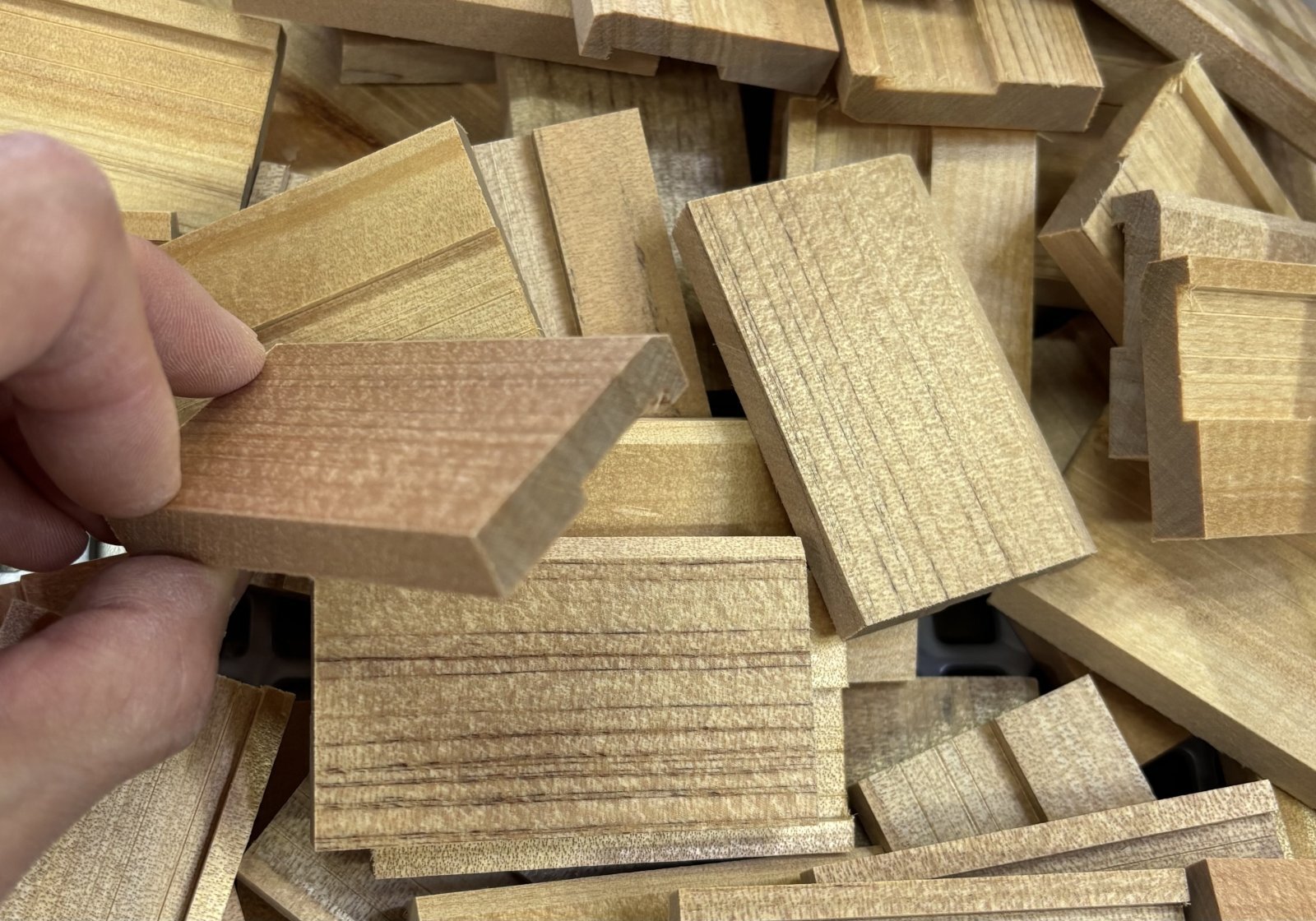
The photo shows the axis panels. Their size varies depending on the box, and so does their thickness. Smaller boxes, such as the 3-sun boxes, have thinner axis panels, while larger ones, such as the 5-sun boxes, have thicker ones. These 4-sun boxes fall somewhere in between. I use axis panels about 8–9 mm thick, adjusting the thickness slightly depending on the number of steps. For this 14-steps model, the bottom panel is fixed in place, so the axis panels do not have to support the box on their own. This means they can be a little thinner. Making them too thick would reduce the space inside, so I try to avoid unnecessary thickness while keeping the box strong. The side edges of these axis panels are glued to the long side panels to support the box, so I would not feel comfortable making them too thin. The mechanism parts are also attached to the axis panels, so they cannot be made too thin. For now, I think this thickness gives the best balance.
Have a good weekend!