Differences in the origin of katsura wood
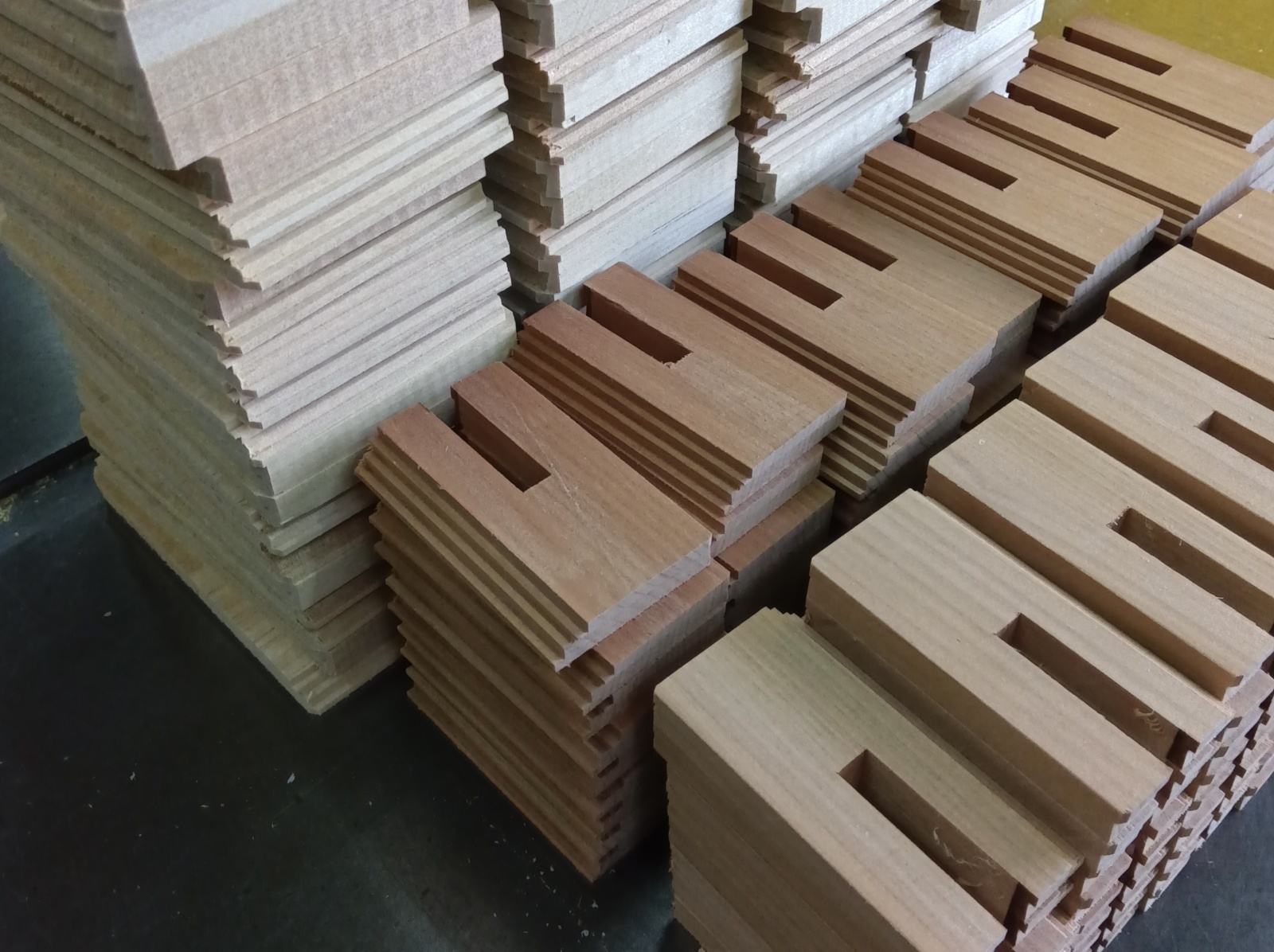
Today was quite different from yesterday and turned into a chilly day. It feels like winter has come back again. This sudden change in temperature may be a sign that the season is slowly shifting toward spring. As planned, I worked from the morning on making and attaching the Aruki sliding panels for the 4-sun 27-steps puzzle boxes. Since the mechanism has 27 steps and requires more detailed work, and because the quantity is a bit large, I was not sure how far I would get. However, by around 5 p.m., I was able to finish attaching the Aruki panels to all of the boxes. My hands are a little sore now, though 😂
As I wrote yesterday, this time I am using katsura wood for the Aruki panels on the sides of the box. Katsura has good elasticity and is a very suitable material for Aruki panels in puzzle boxes. In the photo, I used a beautifully colored brown section of the wood, but it was slightly harder than usual. It was still within an acceptable range, but it may have been on the harder side for katsura. When the color is darker, it usually means the wood is closer to the center of the log. The color is beautiful, but the grain tends to be denser and slightly harder. Wood taken from closer to the outside of the log is softer, but it is not so easy to choose only that part. For the 5-sun puzzle box with drawers that I made recently, I mentioned that the color was a bit pale and not as beautiful. That wood came from closer to the outside of the log, and because of that, the material was softer. Ideally, something in between those two would be best, but it is not realistic to use only that part. Even so, overall, katsura is a very workable and suitable wood for making Aruki panels.
When you touch old Japanese puzzle boxes, you can notice that even though the katsura wood has this beautiful amber color, the material itself is very soft and light. Katsura grows in the northern parts of Japan. I have heard that the wood from Hokkaido and the wood from the Tohoku region, just below Hokkaido, are slightly different in quality. In the past, it seems that wood from Hokkaido was preferred. Today, it is considered a very high-quality and expensive material (Actually, it seems that they are different varieties). Today, good katsura wood has become quite rare. and When I have the chance to use it, I am happy to use wood from either region. However, it seems that the difference in workability depending on the place of origin had already been discussed 40 or 50 years ago. Even at that time, high-quality katsura wood was already becoming scarce.
Actually, I have not yet prepared the top and bottom panels for the 27-steps puzzle boxes, so I plan to pause their production for a day or two. During that time, I will prepare the panels and let them dry. While waiting, I plan to make some 4-sun puzzle boxes. The mechanism will probably be 12 steps or 14 steps. From a previous production, I made extra materials that are still left over, so I plan to make about 20 boxes. I have not decided on the design yet, but the side panels will be the usual ichimatsu yosegi pattern. While working on those, I will also continue moving forward with the 27-steps puzzle boxes.
As I wrote yesterday, this time I am using katsura wood for the Aruki panels on the sides of the box. Katsura has good elasticity and is a very suitable material for Aruki panels in puzzle boxes. In the photo, I used a beautifully colored brown section of the wood, but it was slightly harder than usual. It was still within an acceptable range, but it may have been on the harder side for katsura. When the color is darker, it usually means the wood is closer to the center of the log. The color is beautiful, but the grain tends to be denser and slightly harder. Wood taken from closer to the outside of the log is softer, but it is not so easy to choose only that part. For the 5-sun puzzle box with drawers that I made recently, I mentioned that the color was a bit pale and not as beautiful. That wood came from closer to the outside of the log, and because of that, the material was softer. Ideally, something in between those two would be best, but it is not realistic to use only that part. Even so, overall, katsura is a very workable and suitable wood for making Aruki panels.
When you touch old Japanese puzzle boxes, you can notice that even though the katsura wood has this beautiful amber color, the material itself is very soft and light. Katsura grows in the northern parts of Japan. I have heard that the wood from Hokkaido and the wood from the Tohoku region, just below Hokkaido, are slightly different in quality. In the past, it seems that wood from Hokkaido was preferred. Today, it is considered a very high-quality and expensive material (Actually, it seems that they are different varieties). Today, good katsura wood has become quite rare. and When I have the chance to use it, I am happy to use wood from either region. However, it seems that the difference in workability depending on the place of origin had already been discussed 40 or 50 years ago. Even at that time, high-quality katsura wood was already becoming scarce.
Actually, I have not yet prepared the top and bottom panels for the 27-steps puzzle boxes, so I plan to pause their production for a day or two. During that time, I will prepare the panels and let them dry. While waiting, I plan to make some 4-sun puzzle boxes. The mechanism will probably be 12 steps or 14 steps. From a previous production, I made extra materials that are still left over, so I plan to make about 20 boxes. I have not decided on the design yet, but the side panels will be the usual ichimatsu yosegi pattern. While working on those, I will also continue moving forward with the 27-steps puzzle boxes.